


As we crossed the border from Chile’s Atacama Desert and began our journey north through Bolivia, the landscape unfolded in ways I could scarcely comprehend. Mountains rose from seemingly endless plains, lagoons appeared in unexpected colors, and the earth revealed a palette that seemed almost beyond nature’s imagination. There was a profound sense of isolation, yet everywhere I looked, there was life, color, and beauty.
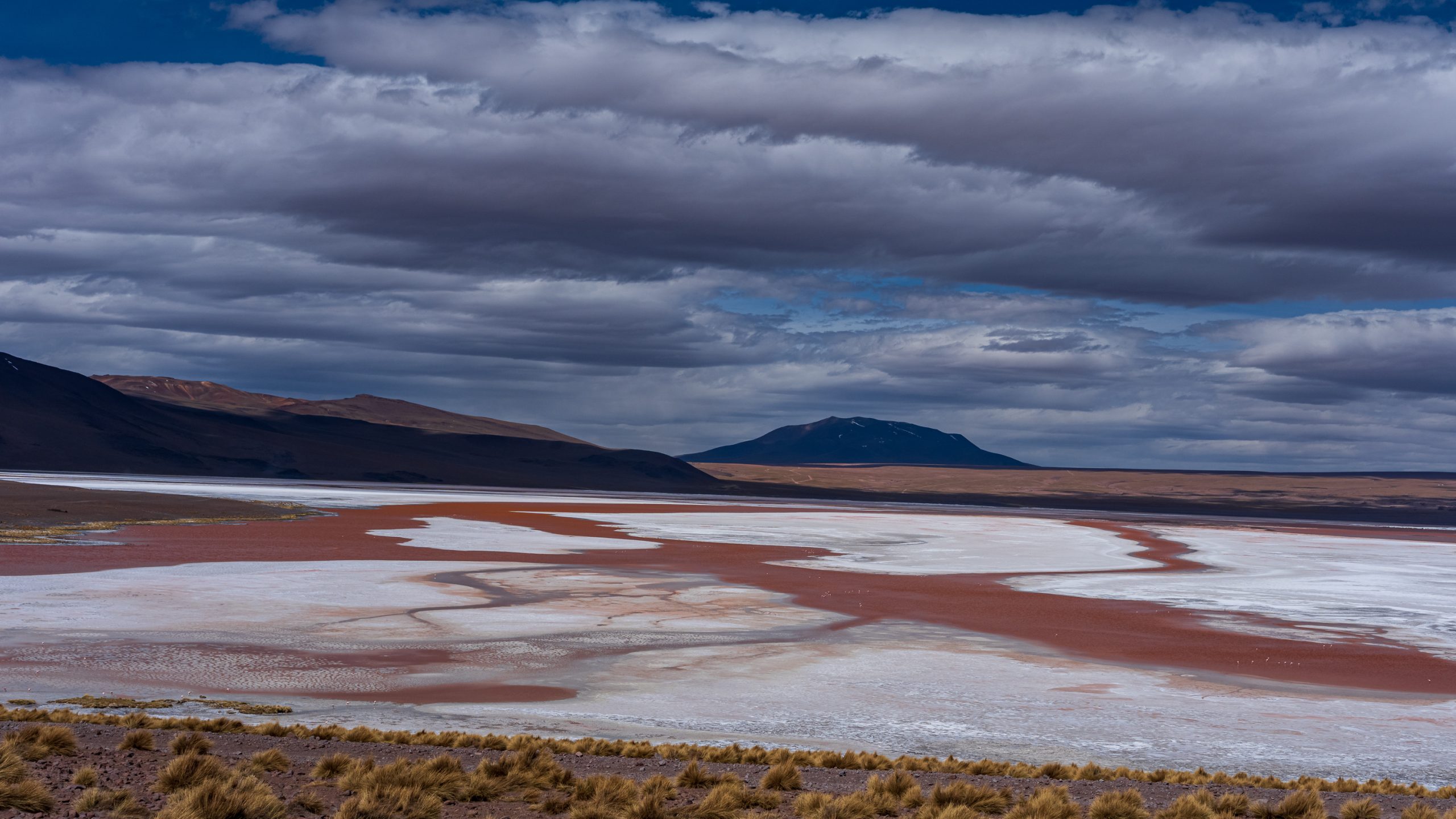
I had read accounts of astronaut Neil Armstrong being mesmerized by this extraordinary region, a landscape often compared to the surface of the moon. Whether or not that story is entirely accurate, I found myself wondering: if this landscape could inspire such comparisons from space, imagine what it could do to someone standing in its midst.
And there I was, camera in hand, surrounded by a world that seemed almost unreal.
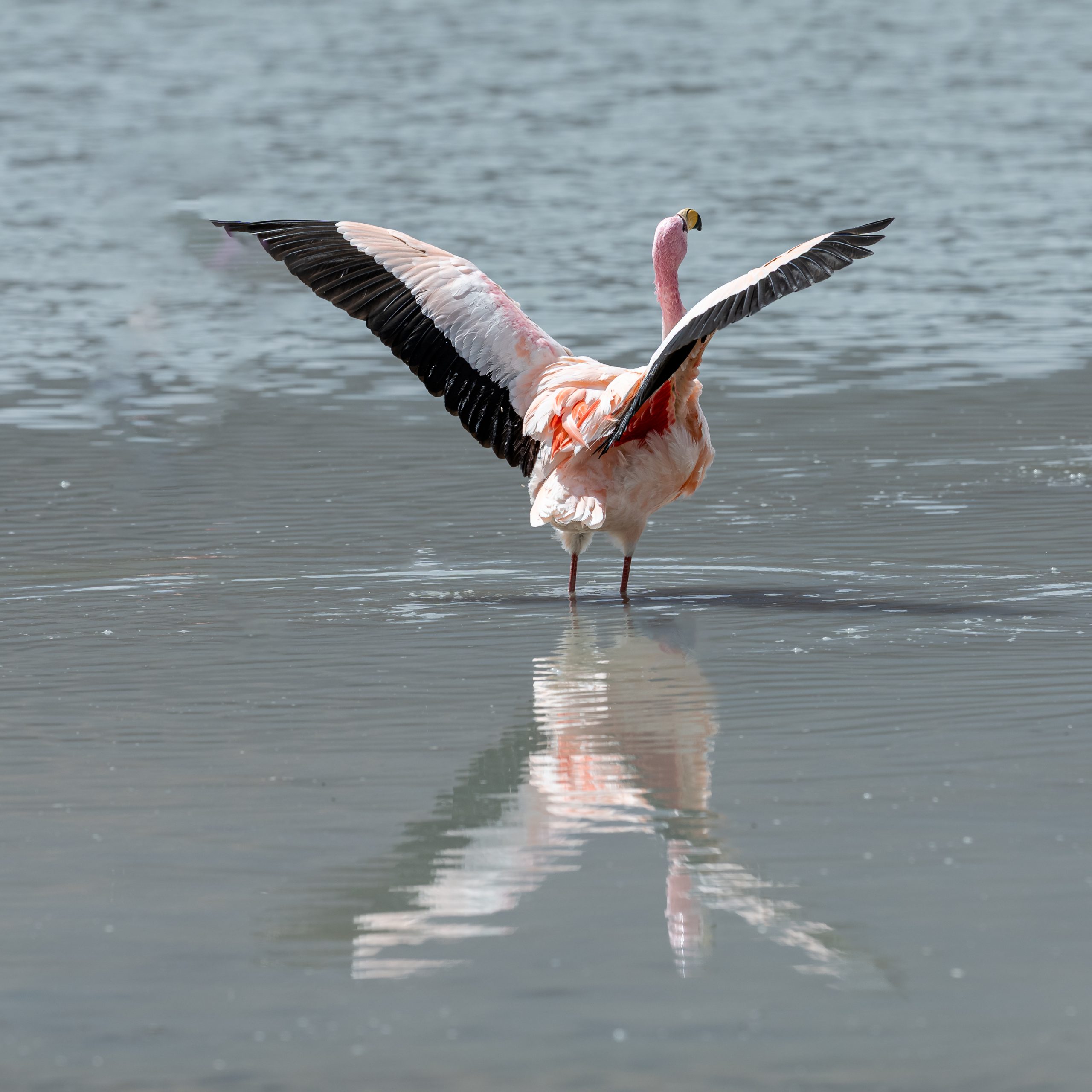
Even in this seemingly inhospitable environment, life flourished. Flamingos moved gracefully through high-altitude lagoons, their delicate forms contrasting with the rugged mountains beyond. It was a reminder that nature finds extraordinary ways to exist, even in the harshest environments.
Our journey took us through three remarkable Explora lodges, each offering a different perspective on this extraordinary land: Ramaditas, Chituca, and finally Jirira, at the edge of the Salar de Uyuni.
What impressed me was how thoughtfully each lodge had been positioned within its surroundings. Rather than imposing themselves upon the landscape, they seemed to belong to it. Equally memorable were the local Bolivian people employed by Explora, whose warmth, knowledge, and attention made every part of the journey exceptional.

And then came the Salar de Uyuni. The world’s largest salt flat is difficult to describe because its scale challenges one’s perception of distance and space. The horizon seems endless, and the vast white expanse stretches outward until land and sky appear to merge.
At elevations ranging roughly from 12,000 to 16,000 feet during our journey through the Altiplano, I sometimes wondered whether the altitude was playing tricks on my senses. While hiking on Fish Island, among towering cacti that stood like silent guardians over the Salar, I paused to look back toward the island’s base. Where the brilliant white salt met the darker, rocky shoreline, the contrast created the unmistakable illusion of ocean waves gently breaking against an island. For a moment, I felt as though I were looking out over an immense white sea. There was no water, no movement, no sound of surf. Only the meeting of salt and stone, yet my eyes insisted I was witnessing a shoreline washed by waves. It was one of those moments when photography becomes secondary to simply being present.
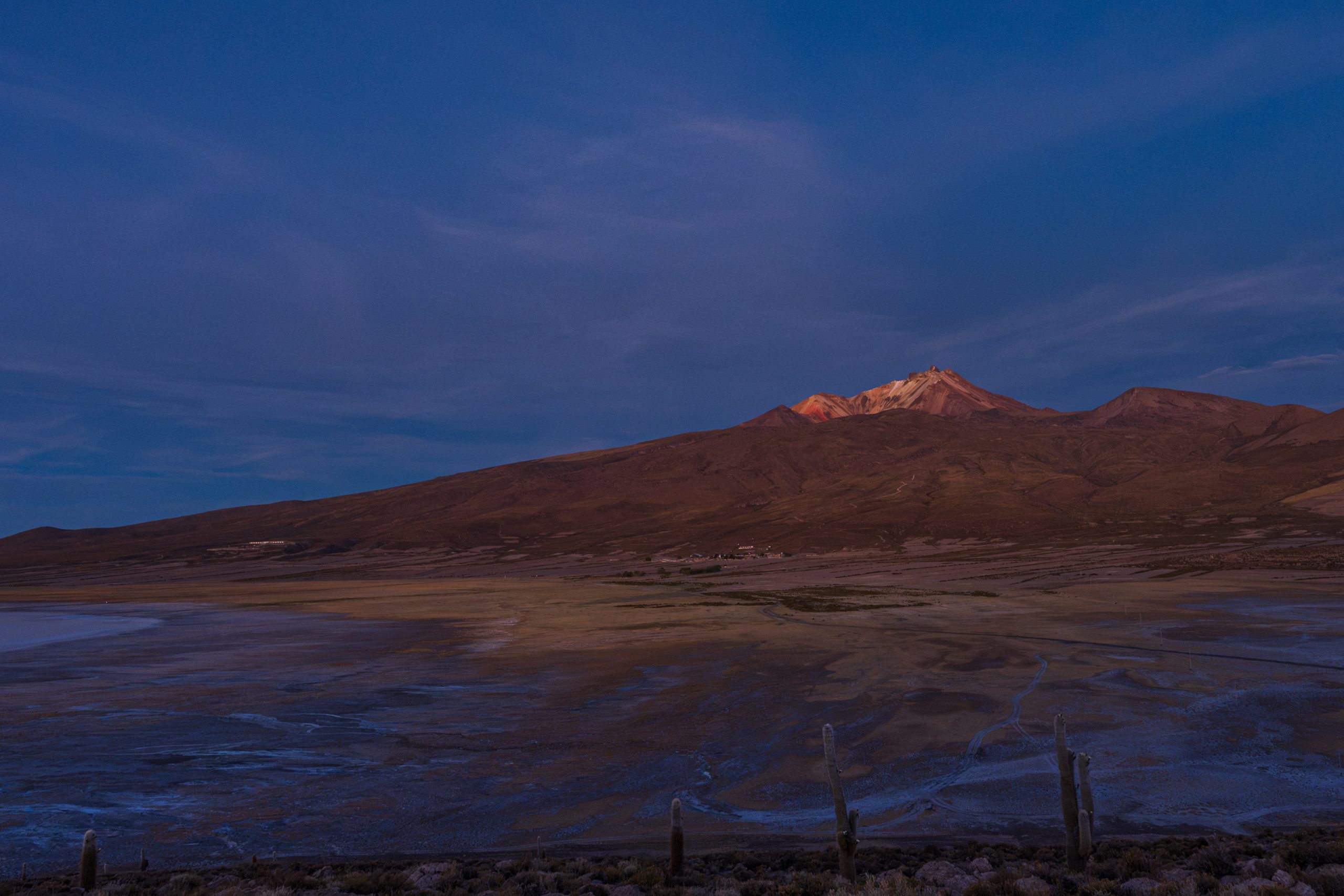
As daylight faded over the Salar, the surrounding mountains and volcanoes took on an entirely different character. The light softened, colors deepened, and the immense white expanse gradually surrendered to the evening sky.
I have photographed landscapes across the world, yet Bolivia offered something distinctly its own.
There was a silence here that seemed almost tangible, a stillness that encouraged me to look longer, think less, and simply absorb what was before me.

Eventually, we left the salt flats behind and made our way to La Paz. And Bolivia had one more extraordinary surprise waiting. Descending into the city’s immense, funnel-like valley, I watched as the landscape became increasingly dramatic with every turn. Buildings clung to steep hillsides, neighborhoods stretched across the mountains, and the city seemed to unfold vertically before my eyes.
The people, their traditions, and the energy of the city brought an entirely new dimension to my experience. Watching the Cholitas wrestle, their colorful traditional polleras swirling through the air, was a remarkable expression of strength, confidence, and cultural identity.

Yet some of my most memorable moments were quieter. The faces of the people, the small markets, the everyday scenes of life unfolding around me. These were reminders that beyond Bolivia’s extraordinary geography lies a country whose human stories are equally compelling.
One of the most remarkable ways to experience La Paz was aboard Mi Teleférico, the city’s cable car transit system. Suspended high above the streets, I found myself looking down upon a city unlike any I had experienced before. The views were astonishing. Mountains, buildings, valleys, and neighborhoods formed a seemingly endless tapestry beneath us.

As my journey through Bolivia came to an end, I reflected on how little I had truly understood about this country before arriving. I came expecting extraordinary landscapes. I found those in abundance. But I also discovered moments of solitude, remarkable people, unexpected beauty, and a sense of wonder that stayed with me long after the camera was put away.
After traveling through so much of our world, I am continually reminded that no photograph, description, or expectation can fully prepare us for the experience of standing somewhere extraordinary. Bolivia was one of those places.