

There are places that impress you with their beauty, and there are places that quietly change the way you see the world.
Greenland did both.
My journey began on the west coast in Nuuk, where mountains, water, ice and extraordinarily long summer evenings define the landscape. From there, I traveled into Nuuk Kangerlua — Nuuk Fjord—before eventually making my way around Greenland to the much more isolated eastern coast. What began as a photographic journey through a remarkable landscape became something broader: an exploration of wildlife, people, geology, vegetation and ice and of an Arctic environment undergoing visible change.
An August Night in Nuuk Kangerlua

Summer evenings in Greenland seem reluctant to end. On this August night in Nuuk Kangerlua, or Nuuk Fjord, the sun slowly descended toward the mountains. The sky turned deep gold and orange while the water below reflected the fading light. Small pieces of ice drifted almost unnoticed across the enormous expanse of the fjord. There was very little separating one element from another—sky, mountains, water and ice became horizontal layers of color and shadow. I waited as the sun reached the mountain ridge and captured the instant when only a thin fragment of it remained visible. It was one of those photographs that is less about an object than a feeling: the quiet and extraordinary scale of Greenland.

Not far from Nuuk, the landscape revealed another side of Greenland. Puffin Island was alive. Atlantic puffins had returned from the open North Atlantic for their brief Arctic breeding season. For much of the year these remarkable seabirds live at sea, returning to land in late spring and summer to reunite at traditional nesting colonies, lay a single egg and raise their chick. Across the grassy slopes and rocky ledges, puffins stood beside their burrows, interacted with one another and periodically launched themselves toward the water. From a distance, the hillside initially appeared to be a mixture of rock and vegetation. Look more carefully and the puffins began to emerge everywhere— small black-and-white figures punctuated by brilliant orange bills and feet. I wanted this photograph to show more than individual birds. I wanted to capture this temporary community, gathered on a small piece of Greenland for one of the most important purposes of their lives—creating the next generation—before returning once again to the sea.
The White-Tailed Eagle
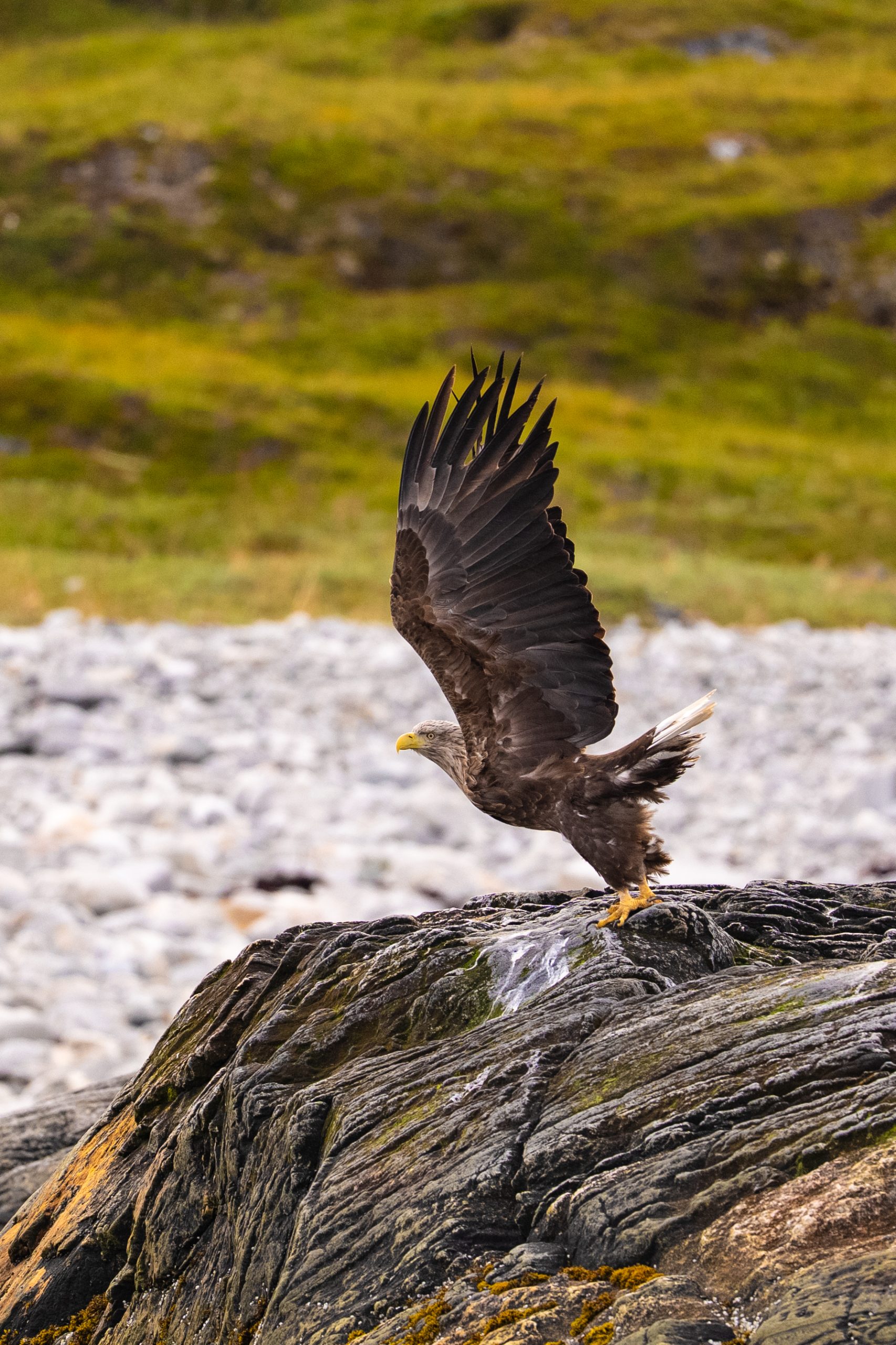
The waters and islands around Nuuk also introduced me to one of Greenland’s most impressive predators: the white-tailed eagle, Greenland’s largest bird of prey.
There is a tremendous difference between photographing a bird sitting on a rock and photographing the instant it becomes airborne. For a fraction of a second, the eagle leaned forward and opened its enormous wings. Its feathers separated against the landscape as its body shifted from resting to flight. That transitional moment was the photograph I wanted. The white-tailed eagle is powerful, but what struck me most was the apparent effortlessness of that power. One moment it was anchored to the rock; the next, it belonged to the Arctic sky.
From West to East
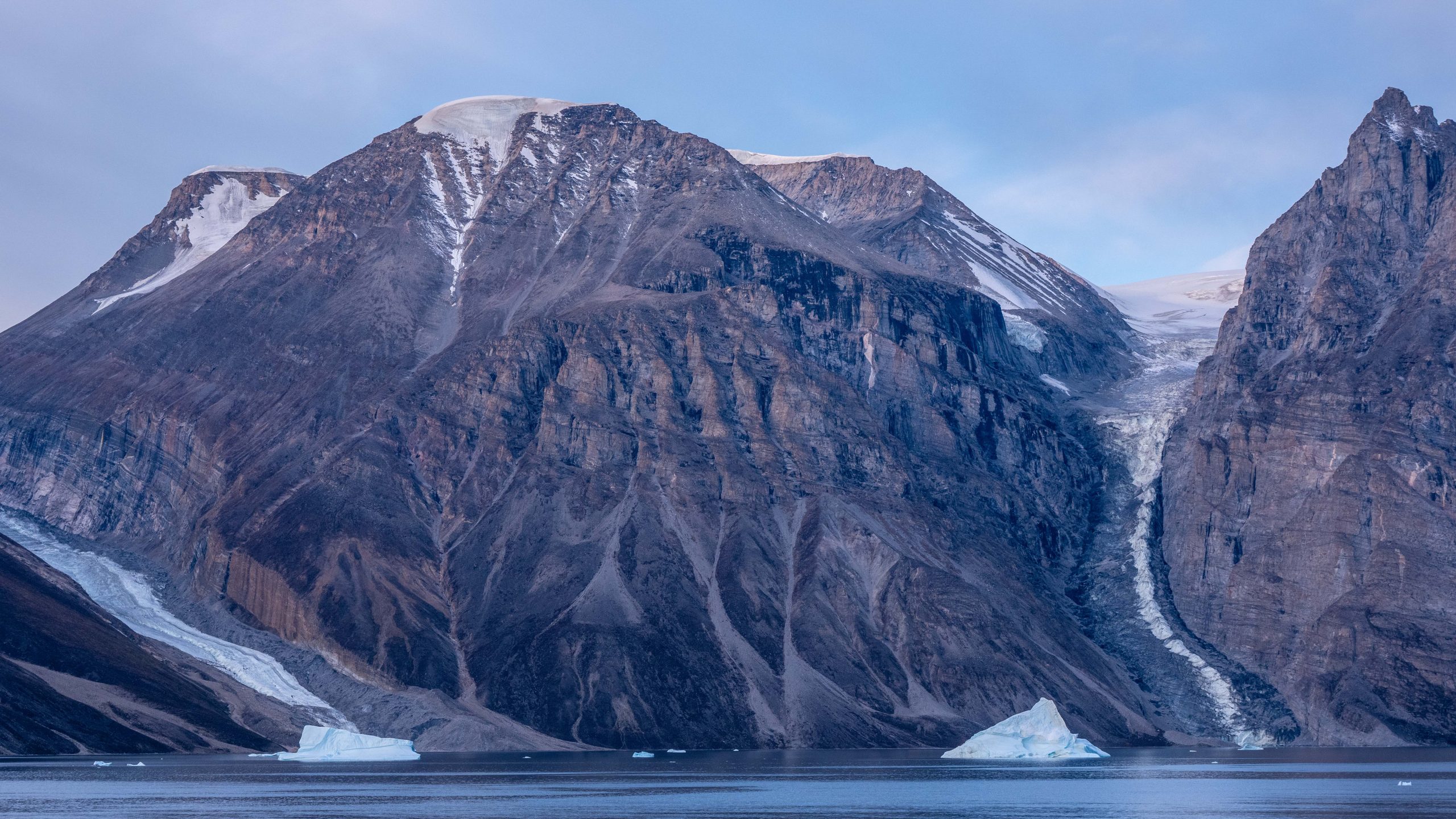
From the west coast, my journey continued to East Greenland, and the character of the country changed. Here the scale and isolation became even more pronounced.
Mountains rise almost directly from the fjords. Glaciers descend through valleys carved over immense spans of geological time. Icebergs drift through dark water beneath cliffs that dwarf nearly everything around them. Scale becomes difficult to comprehend through a camera. An iceberg that appears small beneath a mountain may itself be enormous. A glacier visible between two peaks may extend for miles beyond what can be seen. Human presence becomes almost insignificant against the geography. And yet, people have made their lives here for generations.
Children of Ittoqqortoormiit
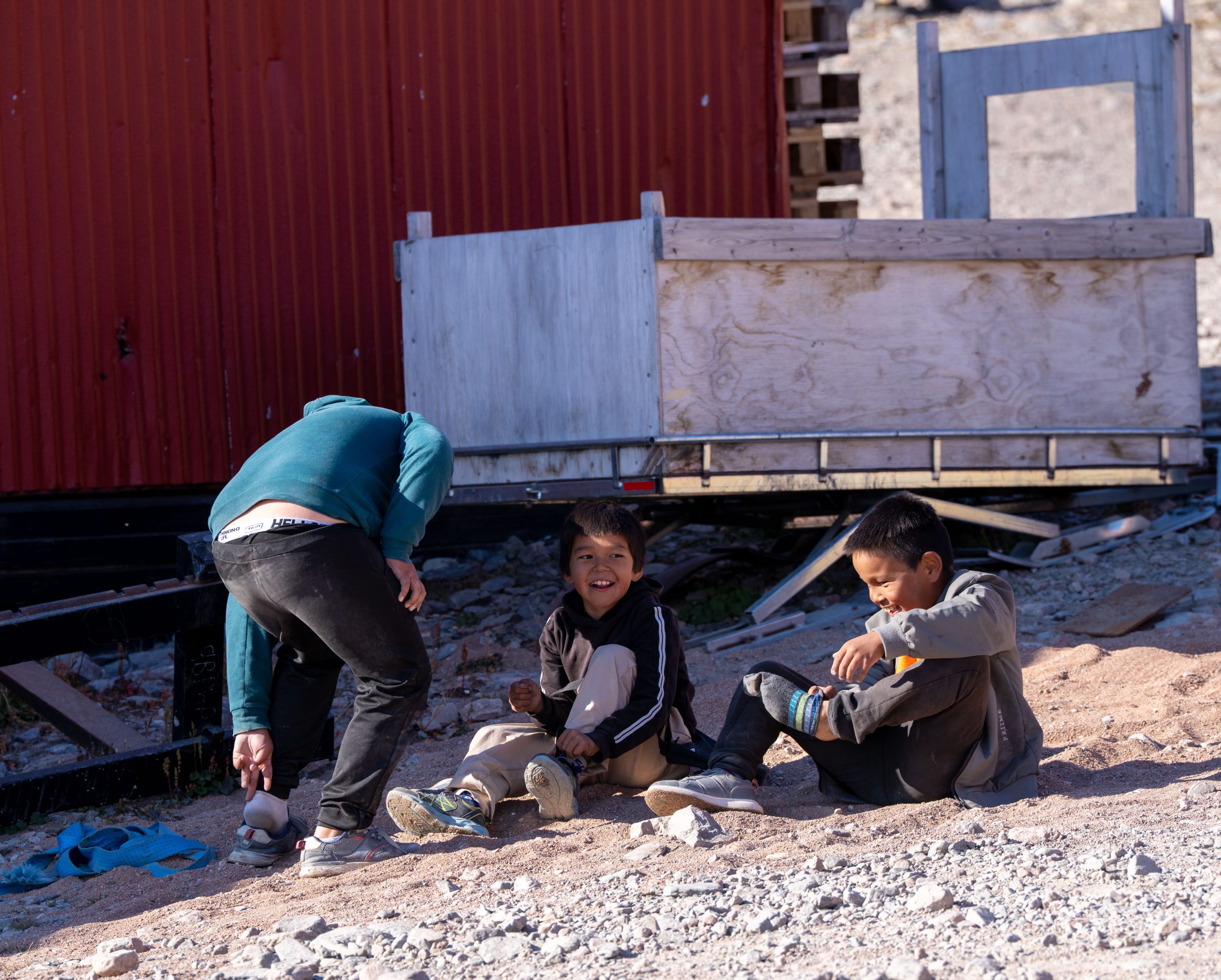
One of my favorite photographs from the journey isn’t of an iceberg, glacier or Arctic animal. It is of children playing. In the remote East Greenland community of Ittoqqortoormiit, I came across these children simply enjoying themselves outside. There was no performance for the camera and no grand landscape needed to explain the moment. There was laughter. Photographs like this are important to me because Greenland cannot be understood only through photographs of wilderness. It is also home. Behind the extraordinary scenery are communities whose relationship with this environment is part of everyday life. Children still play, families work, people laugh and ordinary moments unfold beneath an extraordinary Arctic sky. In a journey dominated by enormous landscapes, this small human moment became one of the photographs I remember most. A
Landscape Written in Ice
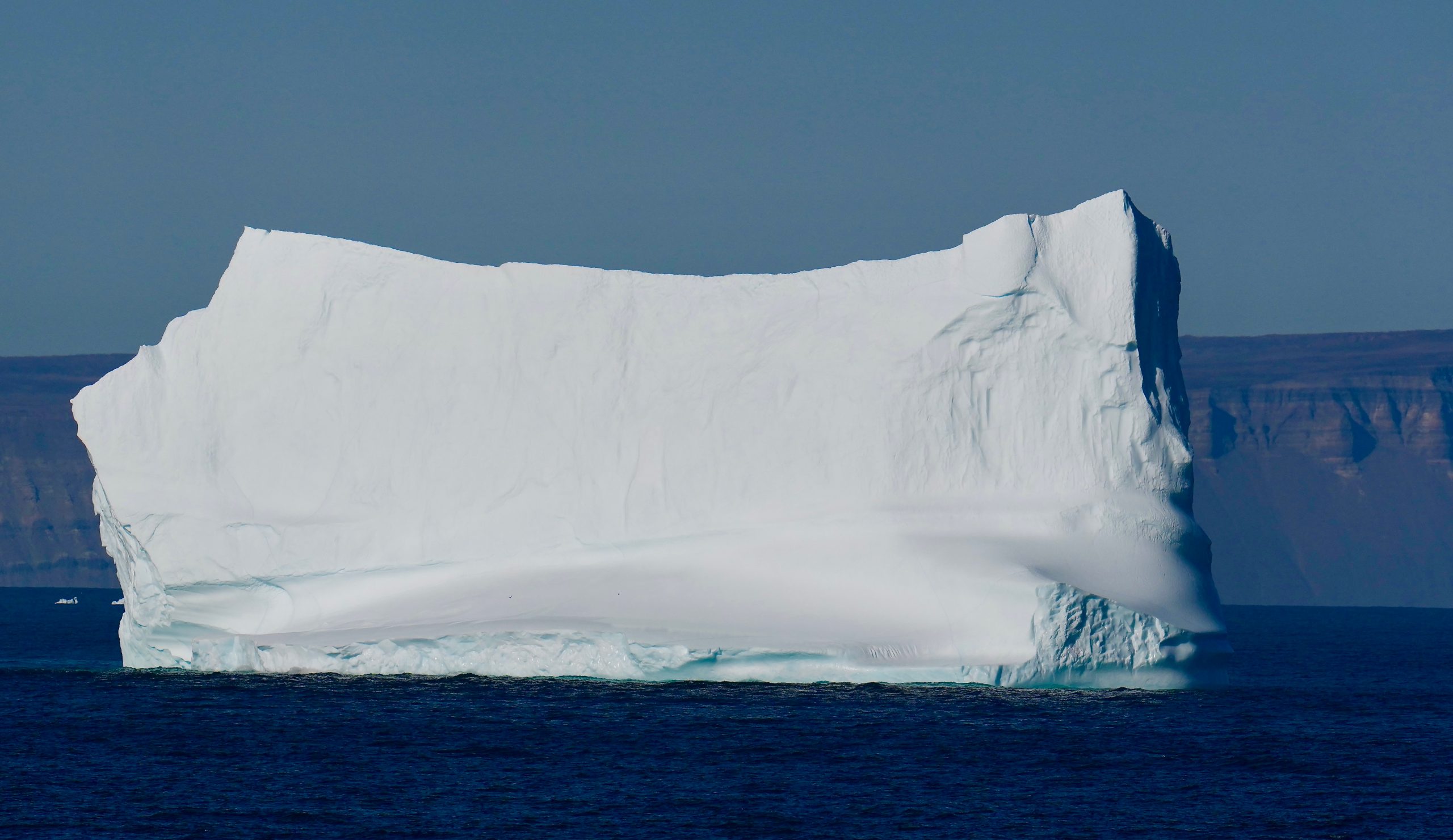
Last Greenland’s mountains tell their own story. Glaciers occupy valleys carved between immense rock faces, while icebergs floating in the fjords provide a sense of scale. What initially appears to be a relatively small piece of white ice at the base of a mountain can be substantial—
the surrounding landscape is simply so enormous that our perception of scale becomes distorted. The ice visible today represents snowfall accumulated and compressed over long
periods of time. Under its own weight, that ice slowly moves downhill as a glacier. When a glacier reaches the sea, sections can break away, or calve, becoming icebergs. The iceberg is therefore not separate from the landscape behind it. It is part of the same story—snowfall becoming ice, ice becoming glacier, glacier becoming iceberg, and eventually iceberg becoming water.
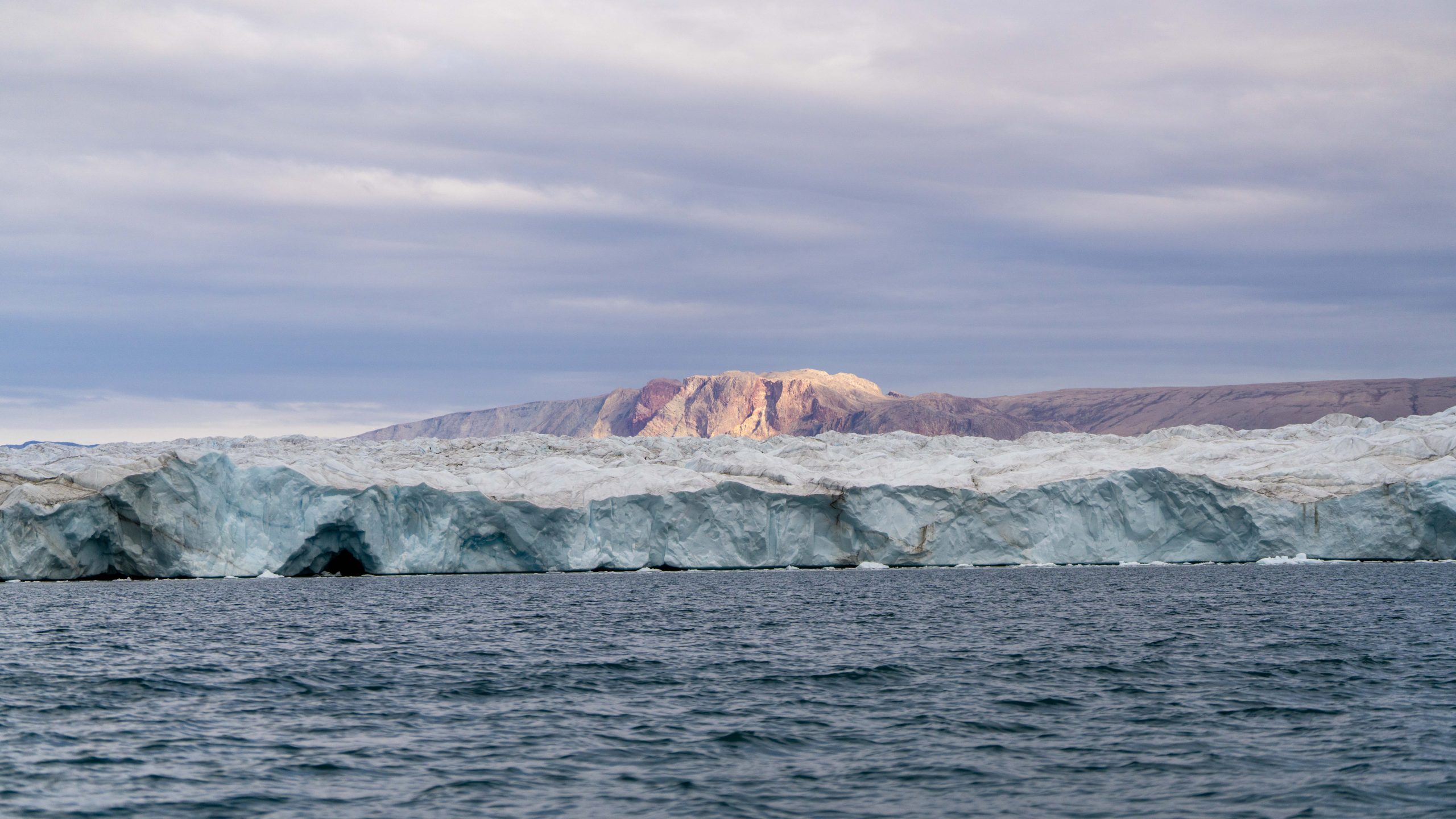
Standing before a glacier makes climate change considerably less abstract. Glaciers have always advanced and retreated naturally. But across Greenland, the
long-term warming trend has accelerated ice loss. Rising air and ocean temperatures are affecting both the Greenland Ice Sheet and many of the glaciers flowing from it. The changes matter far beyond Greenland. As land-based ice is lost to the ocean, it contributes to global sea-level rise. Changes in Arctic ice also affect ecosystems and the physical environment upon which wildlife and human communities depend. A photograph freezes a fraction of a second.
A glacier records something entirely different—decades, centuries and millennia of environmental history. Photographing one therefore carries an uncomfortable thought: The landscape in front of my camera is not permanent.
Life at the Smallest Scale

It is easy to become overwhelmed by Greenland’s scale and overlook what is directly beneath your feet. Among the rocks I found foliose lichens, intricate organisms spreading slowly across stone. Lichens are remarkable survivors. They are not a single organism but a partnership —primarily between a fungus and a photosynthetic partner such as an alga or
cyanobacterium. Together they can survive conditions where many other forms of life cannot. Against Greenland’s immense mountains and glaciers, they seem insignificant. They aren’t.
They are part of a complex Arctic ecosystem in which even the smallest organisms have adapted to cold temperatures, short growing seasons, wind and nutrient poor environments.
Sometimes understanding a landscape means putting down the long lens and looking closely at a rock.
Mountain Avens
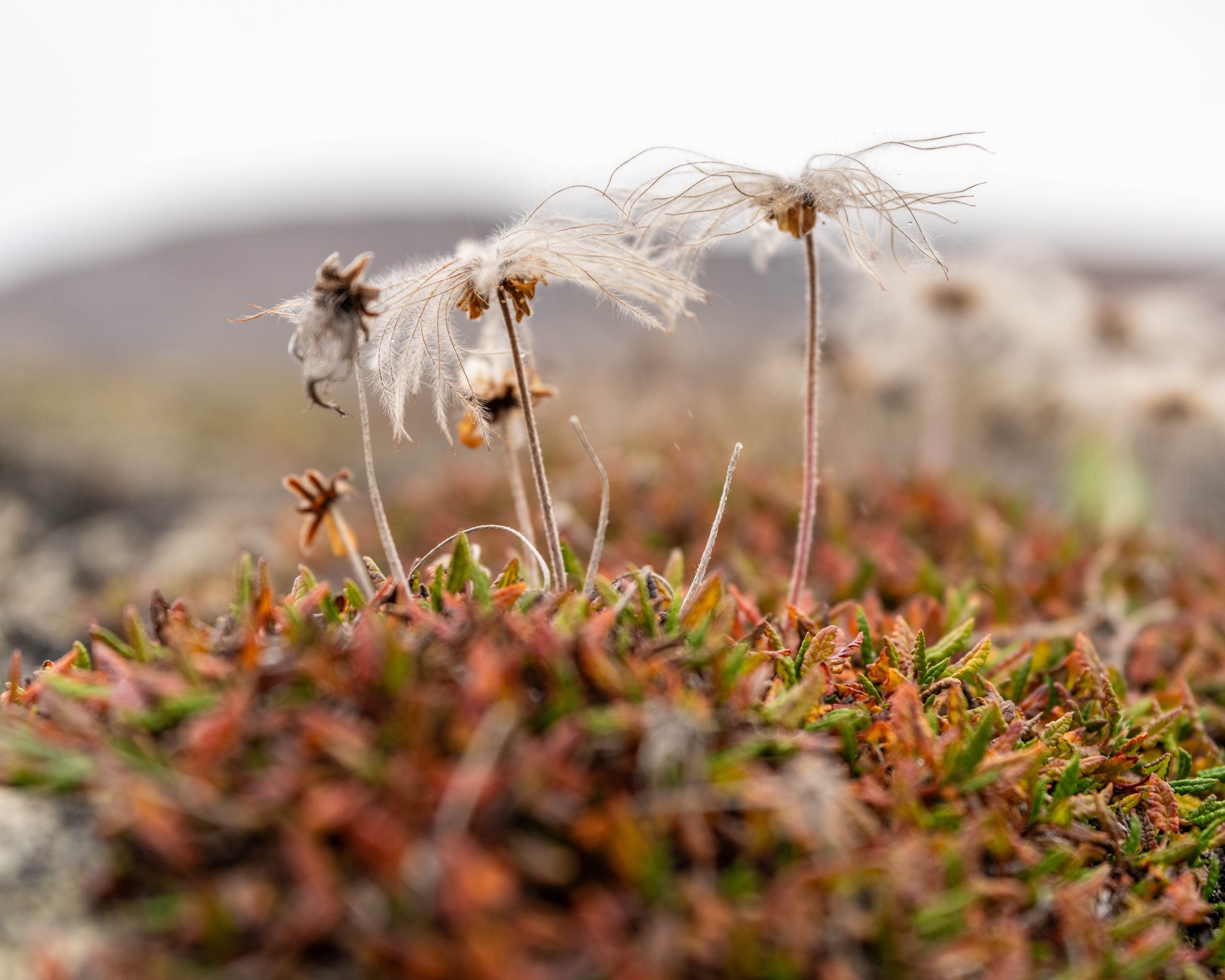
Nearby, the remains of mountain avens told another part of the story. After blooming, the plant produces delicate feathery seed heads designed to catch the wind. They seem almost impossibly fragile against such a severe landscape. Yet this is precisely the kind of adaptation that allows plants to survive here. The Arctic growing season is brief. Plants must emerge, flower, reproduce and disperse their seeds within a narrow window of opportunity.
As Arctic temperatures warm, that biological calendar is changing. Vegetation patterns and growing seasons are shifting, with consequences that can move throughout the ecosystem.
The dramatic evidence of change may be found in glaciers and ice caps. The quieter evidence can sometimes be found in a plant only a few inches tall. Greenland in Transition Greenland left me with contrasts. The enormous and the microscopic. A white-tailed eagle opening its wings and a lichen growing almost imperceptibly across stone. A hillside temporarily filled with puffins that spend most of their lives at sea. Children laughing in one of the world’s most isolated communities. And glaciers carrying ancient ice toward the sea. The Arctic has never been static. Glaciers advance and retreat, plants colonize exposed ground, wildlife populations fluctuate and seasons change.
But today’s warming trend is altering Greenland with unusual speed. The Greenland Ice Sheet is losing mass, glaciers are retreating in many areas, and Arctic ecosystems are responding to warmer conditions. Photography cannot stop those changes.
What it can do is bear witness. These photographs represent Greenland as I encountered it in August 2026—a particular moment in the continuing history of this extraordinary place.
Years from now, I hope they will still be viewed primarily as photographs of beauty, wildlife, resilience and discovery. But they are also a record.
Because sometimes the most important reason to photograph a landscape is simply to say:
This is what I saw.
This is what was here.
And this is why it mattered.