


From high atop Seongsan Peak on South Korea‘s Jeju Island, we spotted a group of women beginning to emerge from the sea far below. They were the legendary Haenyeo, the remarkable female freedivers whose lives have been intertwined with these waters for generations.
Realizing what we were witnessing, we hurried down toward the shoreline, eager for a closer look at these extraordinary women.
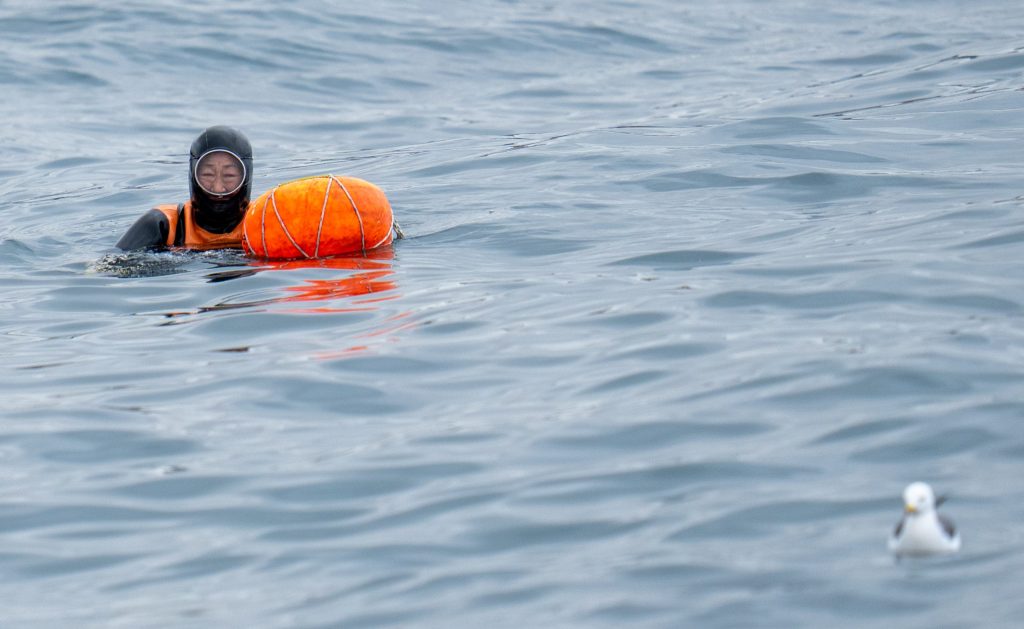
I knew something of their history before arriving, but knowing their story and witnessing their way of life are two very different things. What fascinated me wasn’t simply their remarkable ability to dive into the cold waters without breathing equipment. It was the realization that, for many of these women, this was not an occasional adventure or a passing occupation. It was a lifelong commitment, a skill developed over decades, and a tradition carried forward through generations.
For centuries, the Haenyeo have earned their living by freediving for abalone, sea urchins, octopus, and shellfish. Armed with little more than a wetsuit, mask, fins, and generations of knowledge, they descend repeatedly beneath the surface, holding their breath as they search the ocean floor. Their work requires extraordinary physical endurance, patience, and an intimate understanding of the sea.
And many continue diving well into their seventies and eighties.
I found that astonishing.
As I watched one woman emerge from the water, she carried her day’s harvest in a net slung over her back. Her bright orange float, known as a taewak, had marked her position in the sea while supporting her catch. Her diving mask rested on her head, and the ocean still clung to her wetsuit as she made her way ashore.
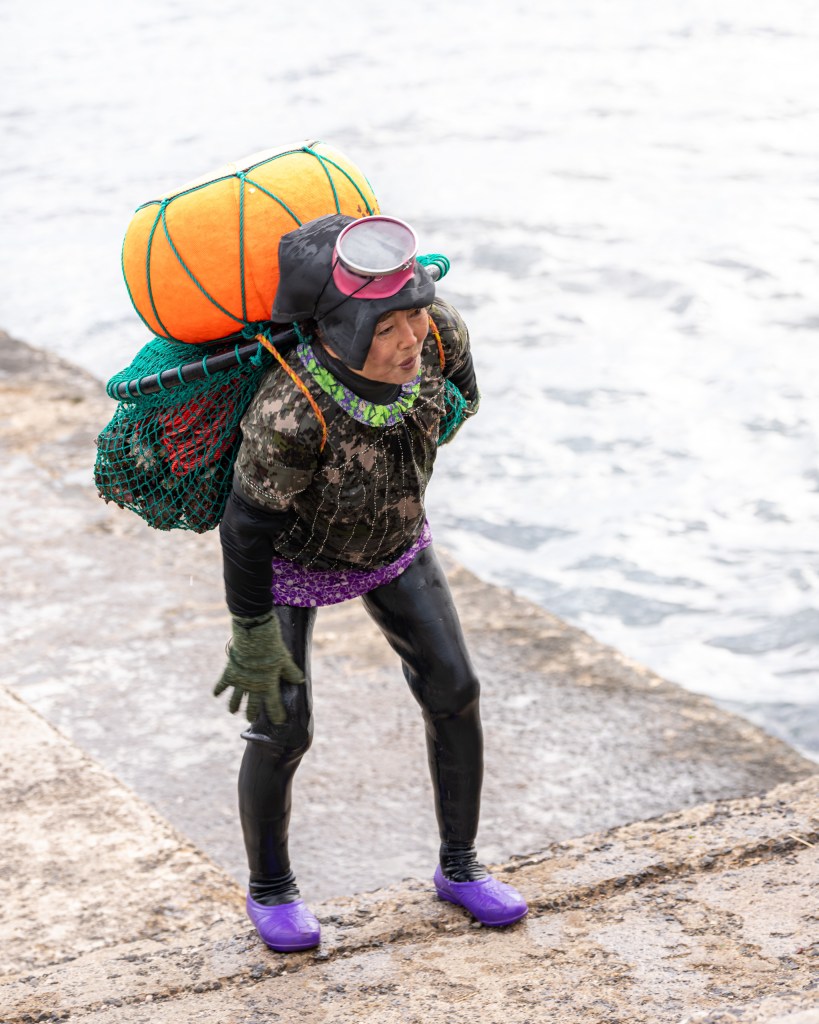
What struck me most wasn’t the weight she carried. It was the quiet confidence with which she carried it.
There was nothing theatrical about the moment. No celebration of what she had accomplished. For her, it was simply another day of work. Yet to me, watching through the eyes of a traveler and photographer, it represented something extraordinary.
I couldn’t help but wonder about the countless mornings she had entered those waters, the changing seasons she had endured, and the years of experience required to develop such a remarkable relationship with the ocean.
The Haenyeo tradition has been passed from mother to daughter for generations, creating communities where women became the primary providers for their families. Their lives reflect not only independence and resilience but also a profound respect for the natural world. Their traditional harvesting practices recognize that the ocean must be protected if it is to sustain future generations.
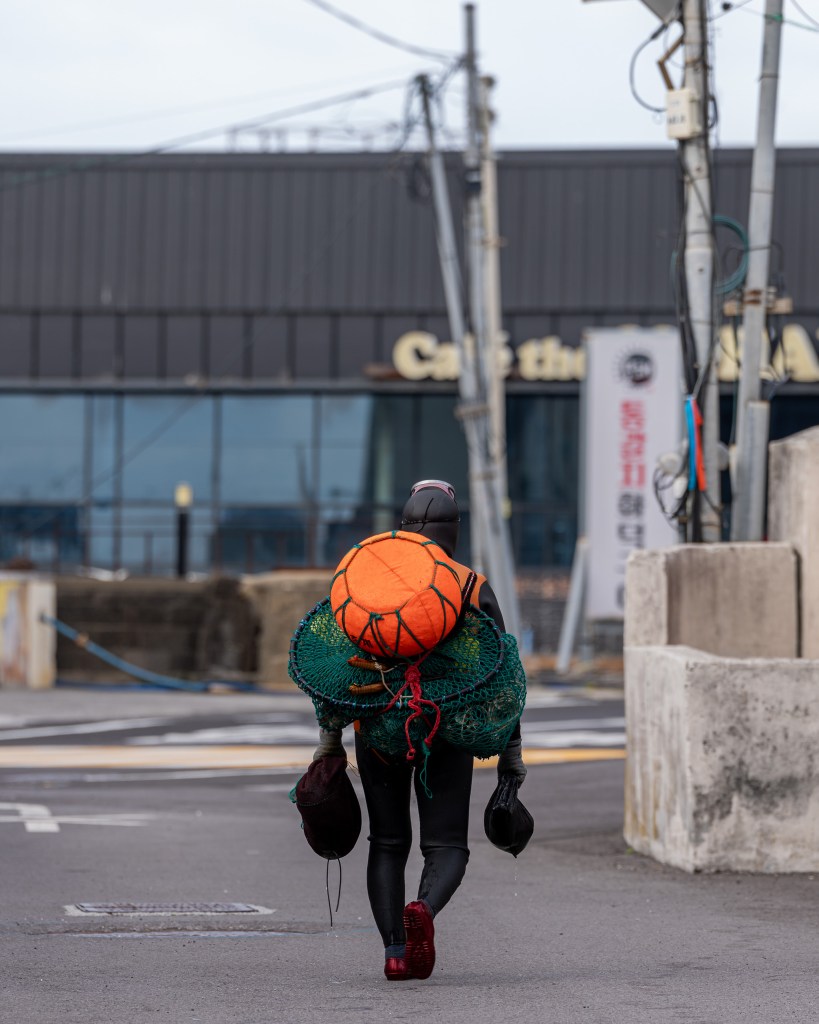
In 2016, the Culture of Jeju Haenyeo was inscribed on UNESCO’s Representative List of the Intangible Cultural Heritage of Humanity, recognizing their diving skills, cooperation, environmental stewardship, and the cultural traditions that have shaped their communities.
But as I stood there watching, I realized that no historical account or international recognition could fully capture what I was witnessing.
These women have devoted much of their lives to mastering an art that demands both physical strength and an almost instinctive understanding of nature. Their knowledge cannot simply be learned from a book. It is acquired through years beneath the surface, through experience, perseverance, and a willingness to return to the sea again and again.
As a photographer, I travel in search of extraordinary landscapes, cultures, and human stories. Yet sometimes the most memorable encounters are not defined by dramatic scenery or grand events.
Sometimes they are found in the quiet dignity of an individual going about a lifetime’s work.