


Children Don’t See Borders
I’ve been fortunate to photograph people on all continents. Ancient temples, towering mountains, endless deserts, bustling cities, and tropical beaches have all found their way into my camera. But if you asked me what connects the world more than anything else, I wouldn’t say architecture or landscapes. I’d say children.
These five photographs were taken thousands of miles apart—in Hawaii, Madagascar, Bhutan, Nepal, and Namibia. Different languages. Different cultures. Different religions. Different ways of life. Yet every one of these children reminded me that childhood has a language all its own.
In Hawaii (lead picture), a young surfer balances effortlessly on a breaking wave. For him, the ocean isn’t a postcard destination—it’s his playground. Confidence, joy, and freedom are written into every turn of the board.
In Madagascar, a little boy stands in the warm evening light, wearing a pink knit hat that seems almost oversized for his tiny frame. He quietly nibbles on fruit, completely absorbed in the simple pleasure of the moment.

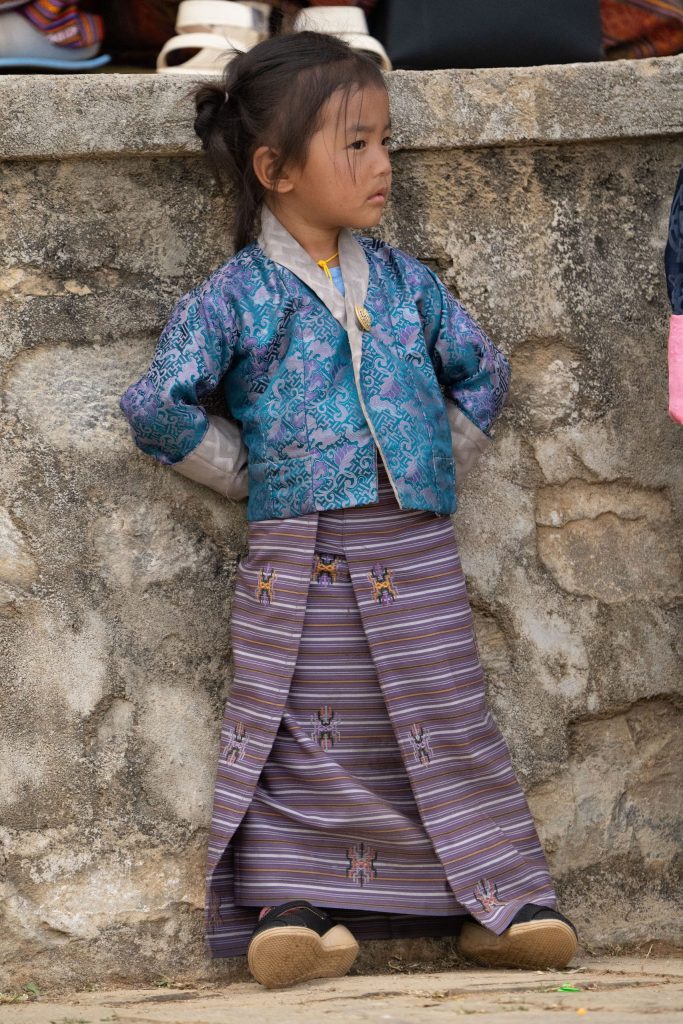
In Bhutan, a young girl waits patiently in her traditional dress during a village celebration. While adults chat and ceremonies unfold around her, she’s simply being a child—curious, observant, and perhaps wondering when all the grown-up stuff will finally end.
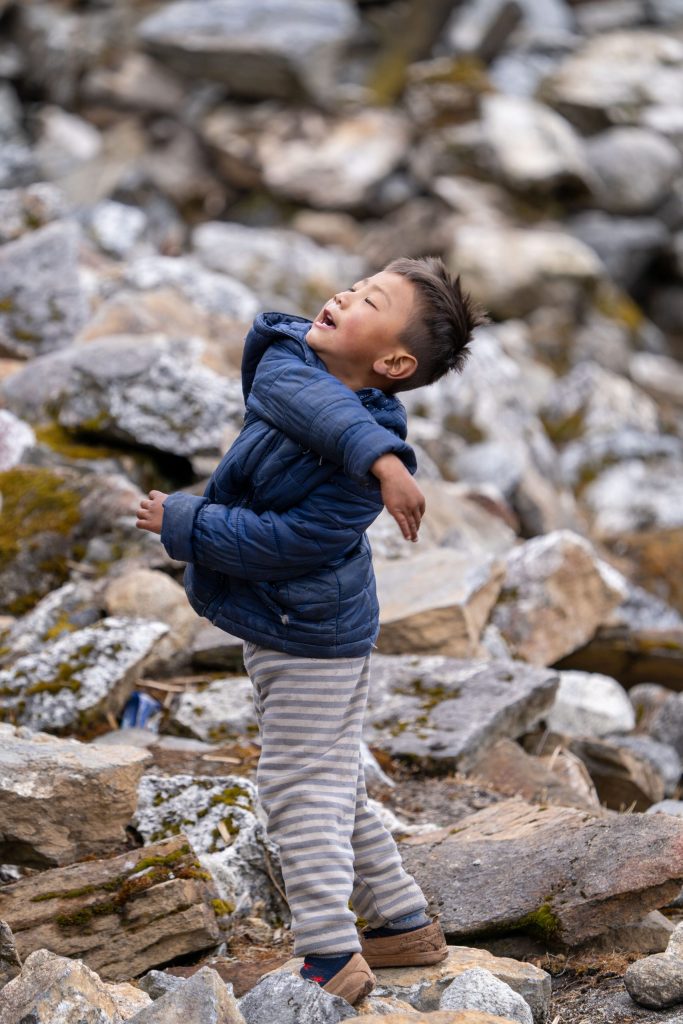
High in the Himalayas of Nepal, a young boy has discovered something far more entertaining than the breathtaking mountain scenery surrounding him. His outstretched arms and joyful expression (after retrieving a soccer ball and throwing it back to a friend) doesn’t need batteries or Wi-Fi.
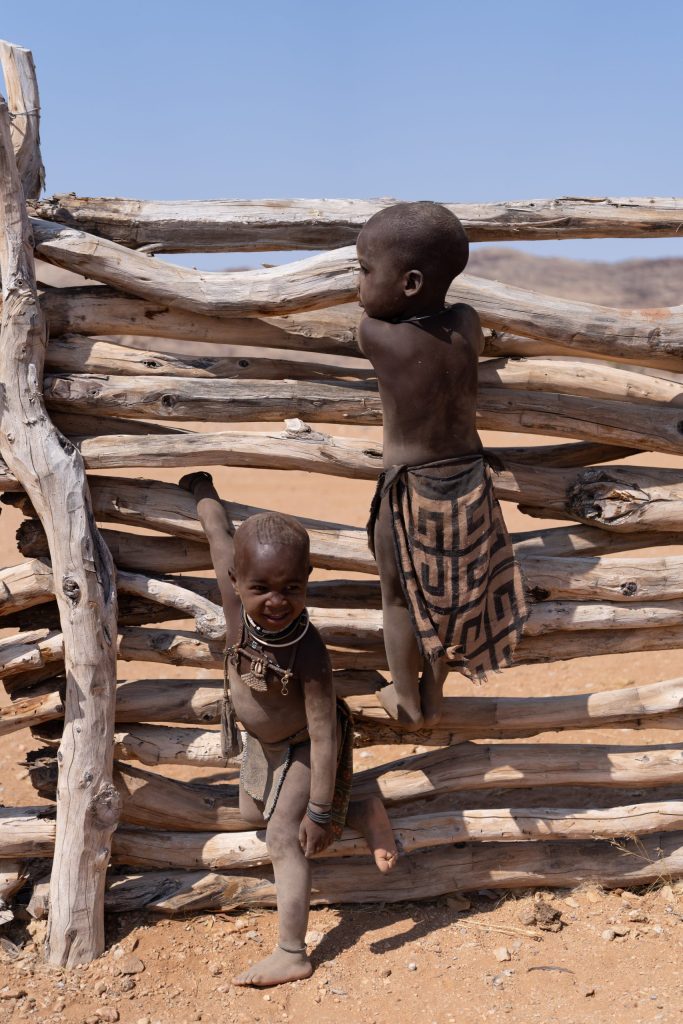
And in Namibia, two Himba children have transformed a rustic wooden fence into the world’s greatest climbing frame. One grins directly toward me while the other peers over the fence, both completely unconcerned with posing for a camera.
Five countries. Five cultures. Five completely different childhoods. Or are they? As adults, we spend far too much time noticing our differences. We debate politics, argue over beliefs, and divide ourselves by nationality, language, and history. Children haven’t learned to do that yet.
- They laugh at the same things.
- They invent games from whatever is nearby.
- They climb fences they’re probably not supposed to climb.
- They pretend to fly.
- They surf waves.
- They snack on fruit while watching the world go by.
They’re simply living in the moment.
One of my favorite travel memories actually came from Europe, although I wasn’t photographing any of these children.
I was walking through a busy square when I heard a familiar phrase spoken with unmistakable parental determination. “Un… deux… trois!” One. Two. Three. A French parent was giving that universal warning. I couldn’t help but smile. It didn’t matter that we spoke different languages. Every parent has counted to three. Every child has ignored them for at least the first two numbers. It was one of those wonderfully ordinary moments that instantly felt universal.
Photography often celebrates what makes places unique, but sometimes its greatest gift is revealing how similar we all are. The faces may change. The landscapes certainly do. But the laughter, the curiosity, the imagination, and the carefree spirit of childhood seem remarkably constant, no matter where in the world you happen to be standing. Perhaps that’s why these photographs mean so much to me. They aren’t really pictures of Hawaii, Madagascar, Bhutan, Nepal, or Namibia. They’re pictures of childhood. And childhood, thankfully, doesn’t recognize borders.
� Behind the Lens Locations: Hawaii • Madagascar • Bhutan • Nepal • Namibia
What connects them? Nothing—and everything. Different continents, cultures, and circumstances, yet every child reminded me that joy, curiosity, and play are among the few truly universal languages.