

The Path of a Bhutanese Monk
At first glance, this photograph (April 2025) feels wonderfully ordinary. Two young Buddhist monks stroll along a path leading to Punakha Dzong. One appears to be intently listening to his companion; each is with smartphones, balancing centuries-old tradition with the realities of modern life.
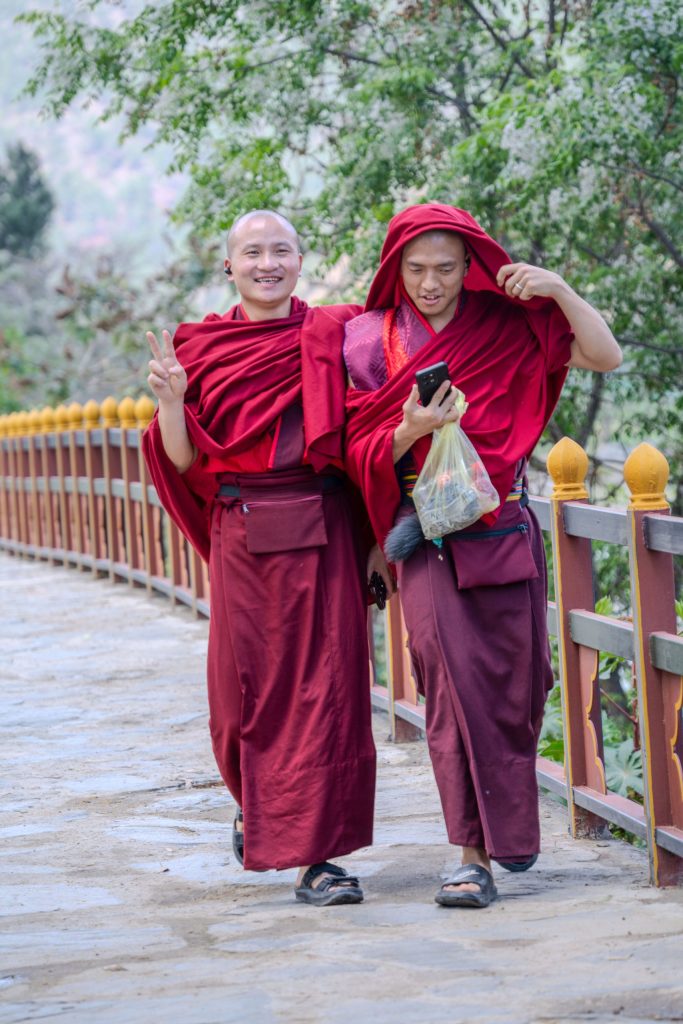
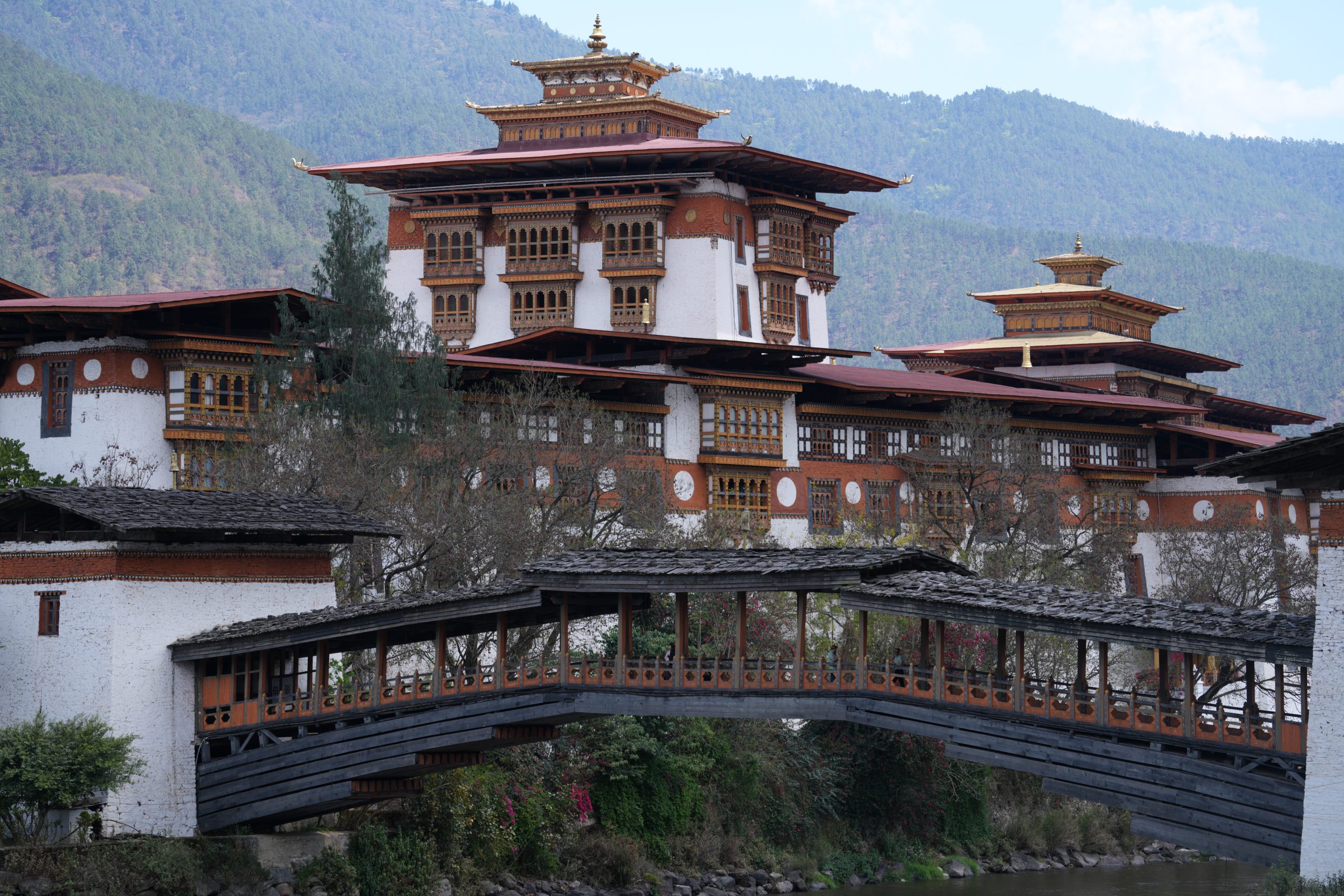
It is a reminder that while their robes connect them to an ancient lineage, they are also young men growing up in today’s world. Yet behind this casual moment lies a remarkable journey. Across Bhutan, thousands of Buddhist monks dedicate their lives to preserving the country’s spiritual heritage. Many begin their training as boys, often entering monasteries before reaching their teenage years. Their days are shaped by discipline and devotion—rising before dawn for prayers, spending hours meditating, memorizing sacred Buddhist texts, learning ritual ceremonies, and studying philosophy under the guidance of senior monks. It is a lifelong education that emphasizes compassion, mindfulness, humility, and service. The heart of Bhutan’s monastic community is the Central Monk Body (Zhung Dratshang), the nation’s principal religious institution. Following a tradition that has endured for centuries, the monks spend the colder winter months at Punakha Dzong, one of Bhutan’s most magnificent fortresses. As temperatures rise, the entire monastic body migrates to Tashichho Dzong in Thimphu for the summer, carrying on a seasonal rhythm established in the 17th century. Known formally as Pungthang Dewa Chhenbi Phodrang—”The Palace of Great Happiness or Bliss”—Punakha Dzong serves not only as the administrative center of Punakha District but also as one of Bhutan’s most sacred religious sites. Standing at the confluence of the Pho Chhu and Mo Chhu rivers, it has witnessed royal coronations, historic ceremonies, and countless generations of monks who have walked these same paths. Watching these two young monks, I was struck by the quiet continuity of Bhutan. The smile, the smartphone, the conversation, and the ancient crimson robes all belong together. Tradition here is not frozen in time—it is alive, adapting without losing its soul.
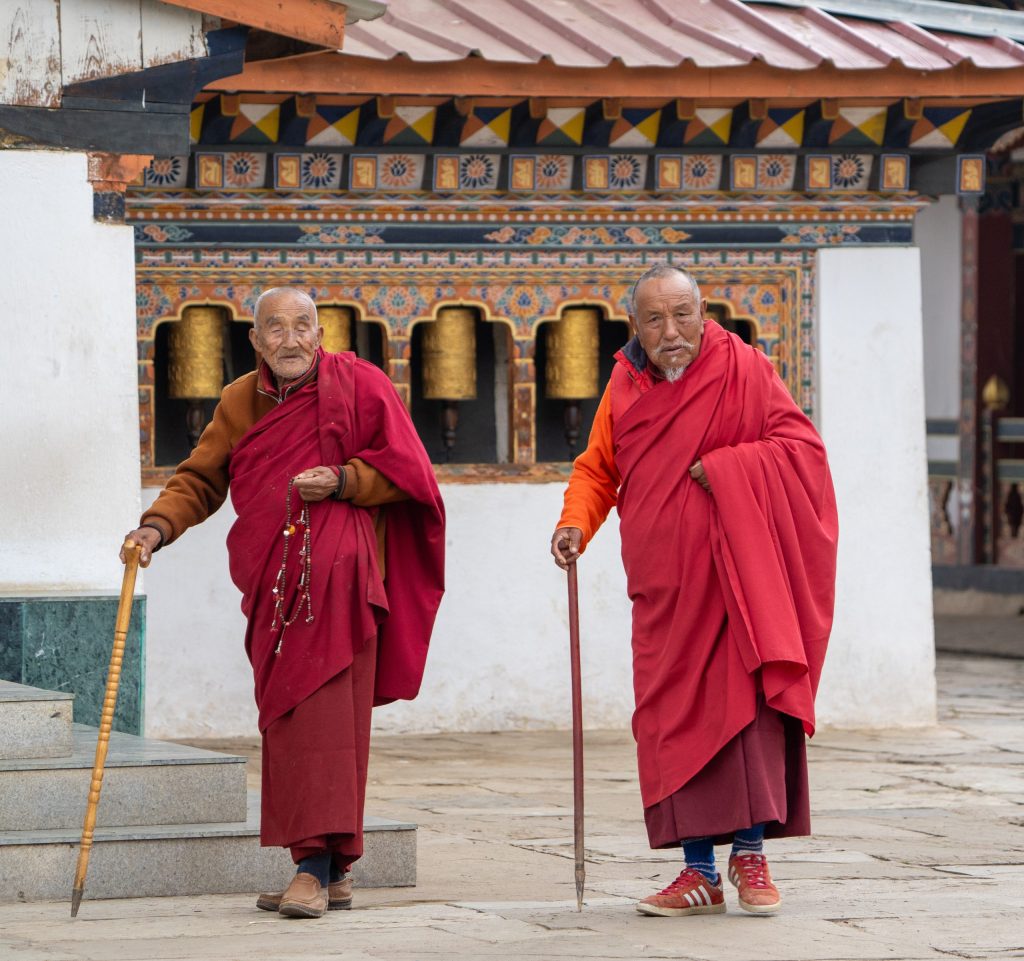
Sometimes the most meaningful photographs are not about grand ceremonies or dramatic landscapes. They are about ordinary moments that quietly reveal an extraordinary way of life—where ancient wisdom continues to flourish, one young monk at a time.